01The place
A leaf from the bay, not a plantation row
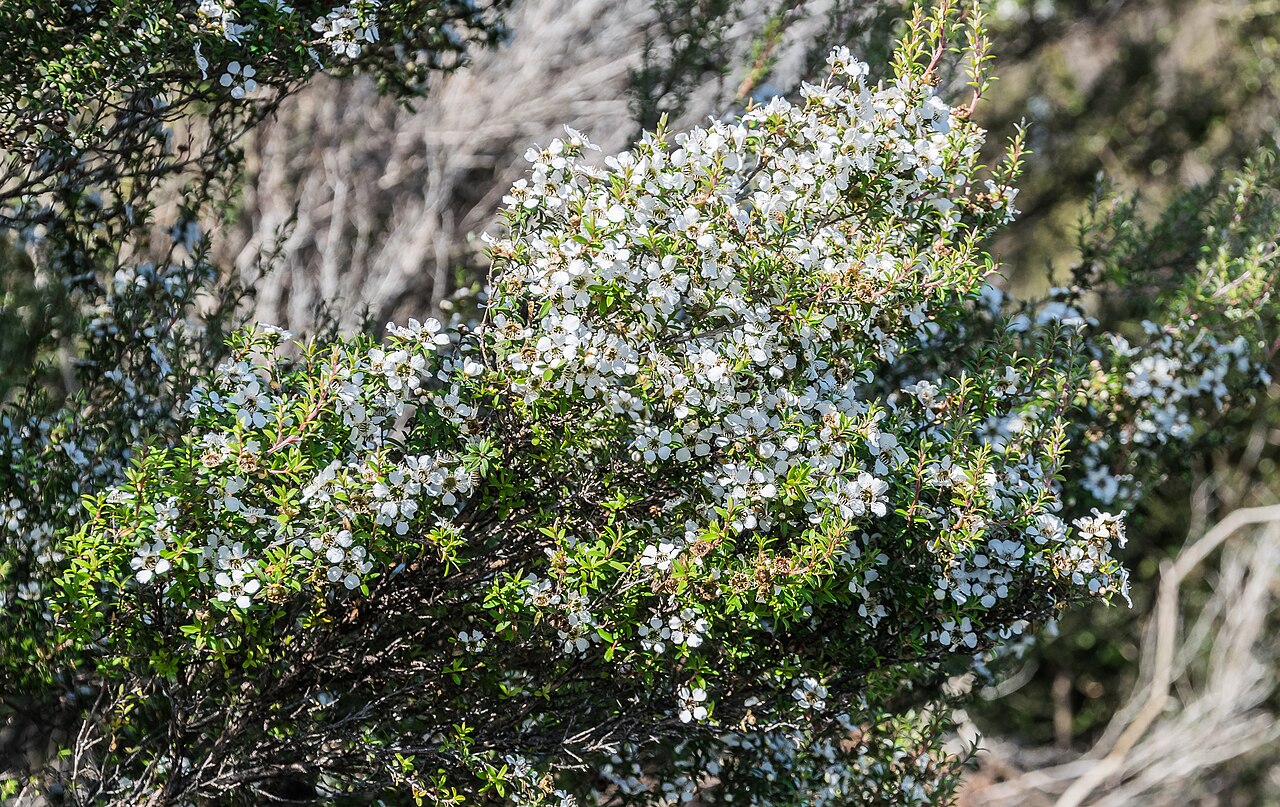
Mānuka Harvest works with wild Leptospermum scoparium growing around Golden Bay. The trees are not planted in lines for this tea. Harvesters look for recent growth in shade and shelter, because wind-exposed tips come up harder in the hand.
Only the soft ends are taken. A small part of each tree is cut, the tree is left standing, and the same plant can be visited again about six months later. The leaf is then dried, graded, and packed at 17 Rangihaeata Road, Tākaka.
03The work
Four quiet steps, then a sealed bag
- 01
Choose
Soft new growth, from trees in shade or out of the prevailing wind.
- 02
Cut
By hand, and only a little from each tree, so the plant keeps growing.
- 03
Dry
Naturally dried, then graded. Batches stay small enough to watch.
- 04
Pack
Loose leaf into 25g and 60g bags, or an export format agreed in advance.
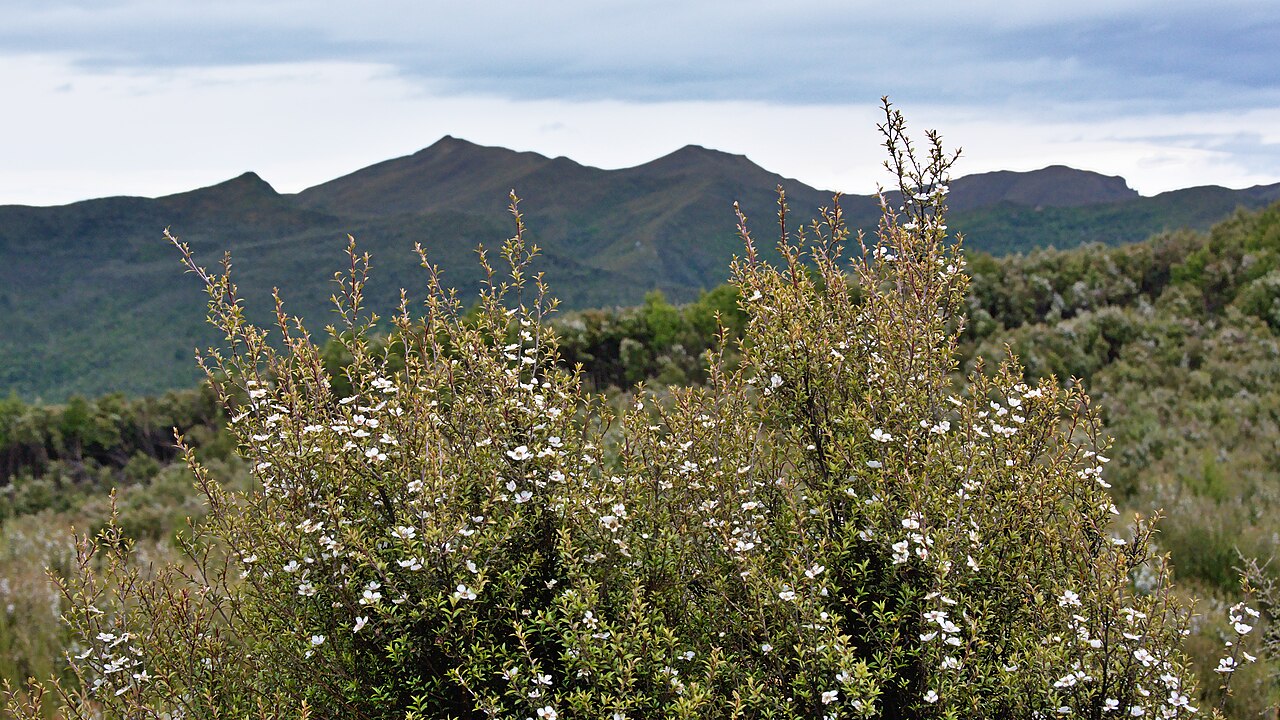
Only the soft tips. Only the sheltered trees. Then we leave them to grow.
04A long use
The medicinal uses of the leaf
Colds and fever
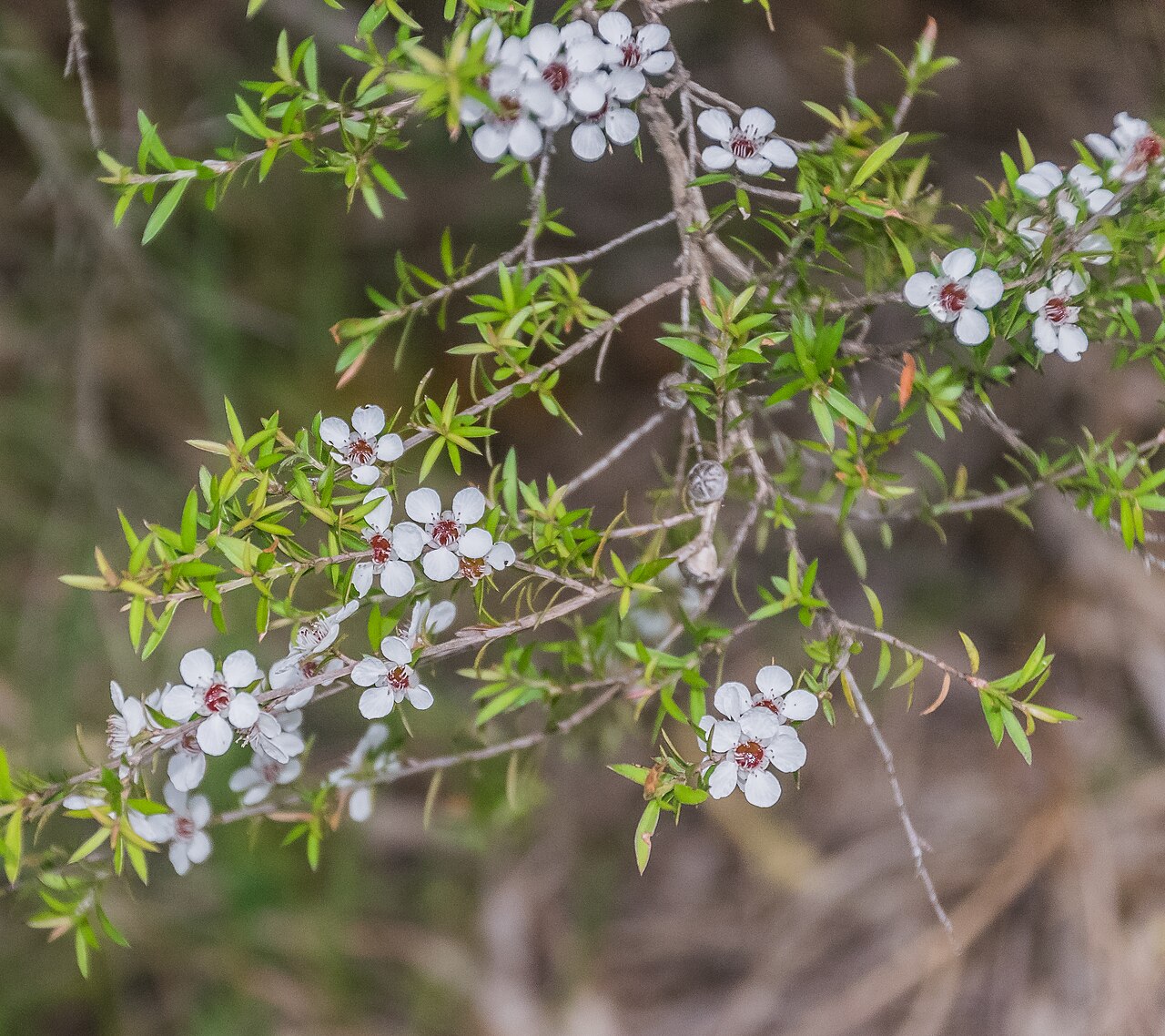
Māori brewed the leaf, and later settlers did the same. A hot infusion was drunk for seasonal colds and fever. The steam was used when the chest felt tight. In 1769, crew from Cook’s voyage were already drinking the green leaf after a long passage. That habit is where the English name “tea tree” comes from.
Digestion and urinary discomfort
In the same traditional practice the cup was taken for an unsettled stomach, and for urinary complaints. It was a household drink for those discomforts, not a clinic preparation.
Skin
Fresh leaves were bruised into a poultice and bound on, sometimes with flax, for wounds and irritated skin. That is a use of the leaf on the body. It is separate from the cup.
The oils that have been studied
The leaf carries aromatic oils, including leptospermone, one of the β-triketones that give mānuka its resinous smell. Laboratory work has examined antibacterial and antioxidant activity in the leaf and its oil. Those studies are about the plant. They are not a clinical trial of this tea.
Mānuka Harvest sells the dried leaf as a food. The uses above are tradition, and published laboratory research on the plant. This tea is not a medicine, and it is not sold to diagnose, treat, cure, or prevent any condition.

06The person who packs it
Julian Edward Hall
Director and founder, Manuka Harvest Limited
Julian has been director since the company was incorporated on 28 March 2007. The shares are held by 40 Degrees South Limited, the ultimate holding company, at the same address on Rangihaeata Road.
He was born in Tākaka and has lived in Golden Bay for most of his life. He grew up at Tukurua, on the western side of the bay, where his parents took on a farm and a camping ground in the early 1970s.
With his wife Nicola he runs a family food and beverage business trading into Asia and Europe. His part of that work is the marketing and the accounts. Before the business, he spent twenty-one years in the Scientific Observer Programme, with time in the Falkland Islands, Africa, and the Antarctic.
The tea is still a small-batch job at home in Tākaka. Nineteen years on, the leaf is chosen the same way: wild trees, soft tips, a short trip from the hill to the packing table.